
谢谢. For Making Canada Relevant Again
By Hans Casteels, writing from the country that perfected apologies, now experimenting with leverage.

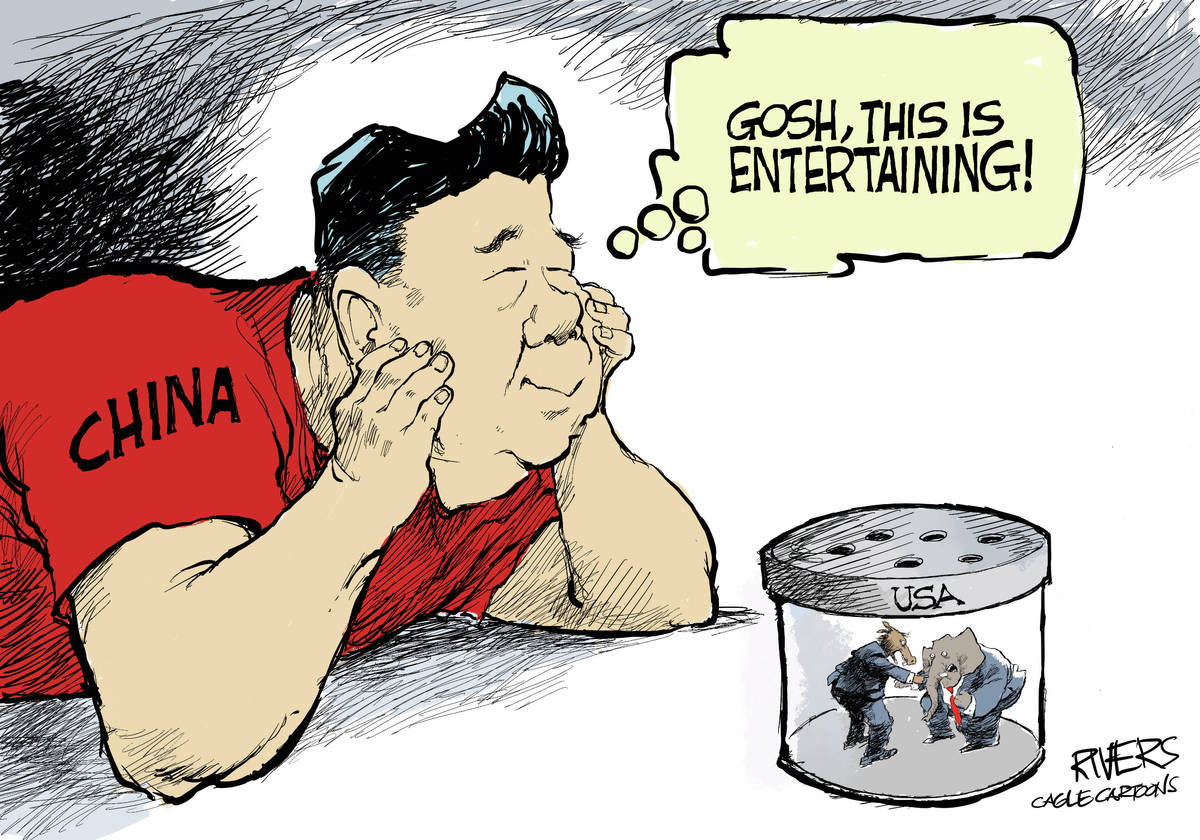
Things change quickly. Not gradually, not politely, not with advance notice. One day the rules feel permanent, the alliances fixed, the future predictable enough to ignore. The next day, the assumptions you built a life on are obsolete, replaced by a new reality that arrived while you were busy doing something sensible like planning. This is not just geopolitics. It is life itself. Careers pivot, relationships realign, bodies fail or surprise us, certainties evaporate. Adaptation is never announced as such. It just becomes obvious, all at once, that standing still is no longer an option. And occasionally, if you are paying attention, you realize that what looks like disruption is simply the overdue correction you should have made years ago.
Which brings me to a time when Canadian prime ministers announced trade deals with the solemnity of a bank manager explaining compound interest. Small podium. Small flag. Smaller expectations. The language was cautious, the numbers were modest, and nobody anywhere else noticed. That era appears to be over.
Yesterday, Prime Minister Mark Carney signed yet another trade deal, this time with China. Yesterday. With China. The same China that Canadians have spent the better part of a decade nervously side-eyeing while quietly buying half their household goods from it. The same China that American politicians describe as an existential threat while checking their phones made there. That China.
And yet here we are. Smiling. Shaking hands. Signing documents. The ink barely dry before someone in Ottawa whispers the unthinkable. This might actually be good for Canada. Let us pause and appreciate how deeply offensive that thought would have been just a few years ago.
Canada, after all, has traditionally built its economic identity around three core beliefs. First, we sell things to the United States. Second, if we sell things to someone else, we apologize. Third, if the United States is unhappy about it, we apologize again, but more sincerely.
Carney seems uninterested in this emotional choreography. Since taking office, he has been signing trade agreements the way other prime ministers signed condolence books. Europe. Asia. Africa. Latin America. Now China. It is starting to feel less like a trade strategy and more like a passport with commitment issues. Naturally, this has unsettled people.
The United States is unsettled because Canada is not supposed to do this. Canada is supposed to wait. Canada is supposed to ask permission. Canada is supposed to gently align its economy with Washington while pretending this is a sovereign choice. Instead, Canada has apparently decided to behave like a mid-sized country with options. This is deeply suspicious behavior.
China, for its part, is delighted. China loves trade deals. China loves partners who show up on time, read briefing notes, and do not try to lecture them mid-handshake. Canada, it turns out, excels at these things.
Which brings us to the uncomfortable truth at the heart of all this. China is not trying to make Canada great again. China is simply doing business. It just happens that doing business with China is making Canada great again as a side effect. This is not the slogan anyone asked for, but it may be the one we deserve.
Consider what Canada brings to the table. Natural resources. Food security. Energy. Minerals. Clean water. A population that believes yelling is rude and contracts matter. In a world that has grown tired of unpredictability, Canada is suddenly the quiet adult in the room. Boring is back. Reliability is sexy again.
China understands this perfectly. While other countries are busy performing domestic political theater, China is calmly securing supply chains for the next thirty years. Canada fits neatly into that plan, like a well-organized pantry that no one bothered to inventory until the storm warnings started. Cue the outrage.
Critics are already sharpening their op eds. Human rights. National security. Strategic dependence. All valid concerns, delivered with the subtlety of a megaphone. And yes, Canada should be clear-eyed about who it is dealing with. This is not a Disney friendship. This is a transactional relationship between two countries that understand leverage very well. But here is the part that makes people uncomfortable. Canada is not being coerced. Canada is choosing.
Carney, unlike many of his predecessors, understands global finance not as a morality play but as a system. Systems do not reward purity. They reward positioning. Canada has spent decades positioning itself as the polite understudy in someone else’s production. Now it appears to be auditioning for a speaking role. This does not mean Canada is abandoning its values. It means Canada has finally learned that values without economic leverage are just strongly worded pamphlets.
Meanwhile, south of the border, the contrast could not be more striking. The United States is rediscovering tariffs with the enthusiasm of a teenager finding vinyl records. Protectionism is fashionable again. Allies are optional. Predictability is overrated. And Canada, watching all this, has quietly decided to hedge its bets like a nation that has read the room. China notices this. China always notices this.
There is also something deeply Canadian about the entire affair. Canada is not grandstanding. There are no victory laps. No chest-thumping slogans. No red hats. Just press releases, spreadsheets, and a collective shrug that says, well, this seems sensible. And perhaps that is the most subversive part of all. Canada is not trying to replace anyone. Canada is simply diversifying, a word that sounds boring until it saves your economy.
Trade with China does not mean dependence. It means options. It means leverage. It means that the next time someone threatens tariffs, Canada can smile politely and think about soybeans, rare earths, or battery supply chains halfway across the Pacific. That smile is new. It is unsettling. It may even be dangerous. But it is also the smile of a country that has realized it does not have to choose between being virtuous and being relevant. It can attempt both, imperfectly, like everything else Canada does.
So yes, China is helping make Canada relevant again. Not out of kindness. Not out of ideology. Simply because Canada finally showed up with something to sell and the confidence to sell it.
This will not end neatly. There will be backlash. There will be think pieces. There will be solemn warnings delivered by people who have not read the actual agreement. There always are. But for now, Canada is doing something radical. It is acting like a grown-up economy in a messy world. And if that happens to annoy a few people along the way, well, Canada will apologize. Later.
A small request for your consideration…
I don’t charge for this Substack and I never will. If you judge that this writing has any value, the only place it can be converted into money is here: a voluntary GoFundMe to help purchase new NICU bassinets for William Osler Health Centre. This exists because Ontario’s healthcare funding model has been allowed to decay to the point where essential neonatal life-support equipment can be twenty years old and still in service. That is not resilience. That is neglect with a communications strategy. When governments chronically underfund hospitals, responsibility quietly migrates downward until the public is left compensating for structural failure. Premature and critically ill newborns do not benefit from ideology, talking points, or budgetary patience. They benefit from functioning, modern equipment. This is you and me stepping in because the system did not.
"Reliability is sexy"
Perhaps it's just me but don't you think Mark Carney has a bit of the George Clooney vibe..the Canadian version.
I wish I lived there. Can't handle the snow. I say this with 2 inces headed our way